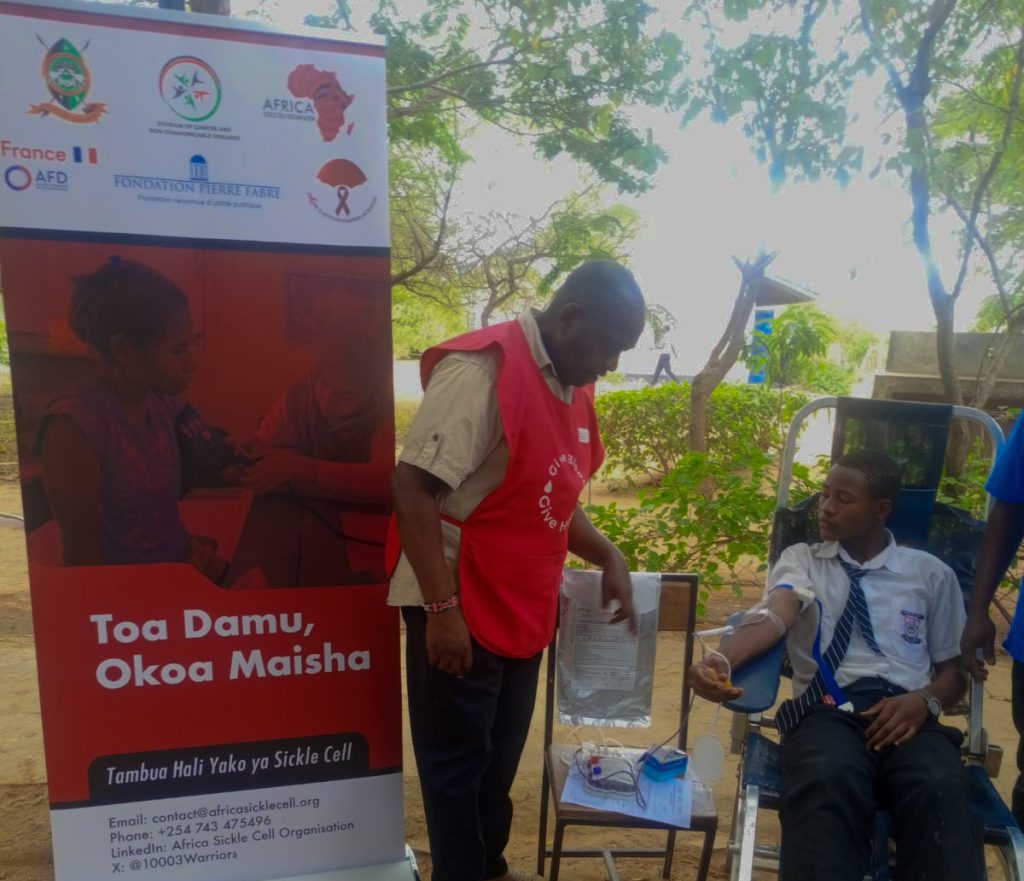
What happens when a biology lesson becomes an opportunity to save lives? In Taita Taveta County, students are discovering that what they learn in the classroom can play a vital role in supporting people living with sickle cell disease (SCD).
During this year’s Sickle Cell Awareness Month, Africa Sickle Cell Organisation (ASCO) under the KETAN project, in partnership with the Taita Taveta SatelliteBlood Transfusion Center, took sickle cell awareness and blood donation education directly to learning institutions across Taita Taveta County. The initiative sought to bridge the gap between health information and community action by engaging young people in conversations about SCD and the importance of voluntary blood donation.
Turning Knowledge into Action
Across more than 13 learning institutions, blood drives were accompanied by dedicated health education sessions, giving students and school staff an opportunity to learn about SCD, the importance of blood donation, and how donated blood supports patients who depend on transfusions.
What made these sessions particularly meaningful was the enthusiasm with which students engaged with the discussions. Through interactive question-and-answer sessions, learners demonstrated curiosity and a willingness to understand the realities of living with SCD.
Some students even drew on their biology lessons about genetics to contribute to discussions on how sickle cell disease is inherited. These moments demonstrated how classroom knowledge can provide a foundation for deeper health conversations, helping young people connect what they learn in school with the health challenges affecting their communities.
Beyond raising awareness, the sessions created an opportunity to challenge misconceptions, encourage informed conversations, and help students understand how voluntary blood donation can make a difference in the lives of people living with SCD.
When Communities Give, Lives Are Supported
The outcome of the campaign extended beyond awareness through the blood drives conducted across the county, 743 units of blood were collected.
“Our monthly target based on the 2019 population census is approximately 300 units. However, considering the population growth and increasing demand for blood and blood components, the department has adopted an operational target of 500–600 units per month. During September 2026, we successfully collected 743 blood units through the Better than Gold campaign, surpassing our operational target.” Mr Daniel Nzuki expressed.
This reflects the potential of community engagement and partnerships in strengthening blood availability for patients who need transfusions. Furthermore, bringing blood donation drives and health education together, the initiative demonstrated how schools can serve as important platforms for mobilizing communities around health priorities.
Inspiring the Next Generation of SCD Champions
The Better than Gold campaign was not only about the blood collected or the number of institutions reached. It was also about the conversations started and the knowledge shared with young people who can carry these messages far beyond their classrooms.
Students and school staff were called upon to become ambassadors for SCD awareness and voluntary blood donation, sharing accurate information with their families, friends and wider communities. By equipping young people with the knowledge to speak confidently about SCD, the initiative aims to foster more informed, compassionate and supportive communities for people living with the disease.